Overview
You dropped your bike in the parking lot. The fairing cracked. The dealer quote comes back panel by panel, and the total rises fast once you need a painted upper cowl, side panels, and small trim pieces. Then a riding buddy mentions aftermarket fairings and your first question is: what are motorcycle fairings, and does it really matter which kind I buy?
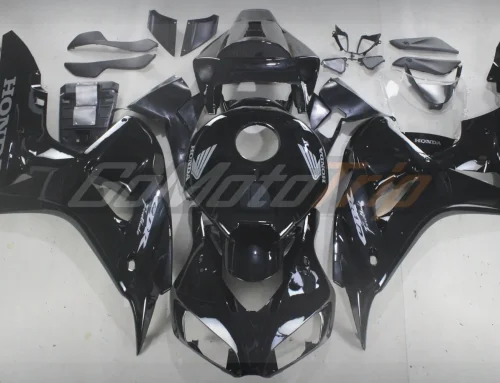
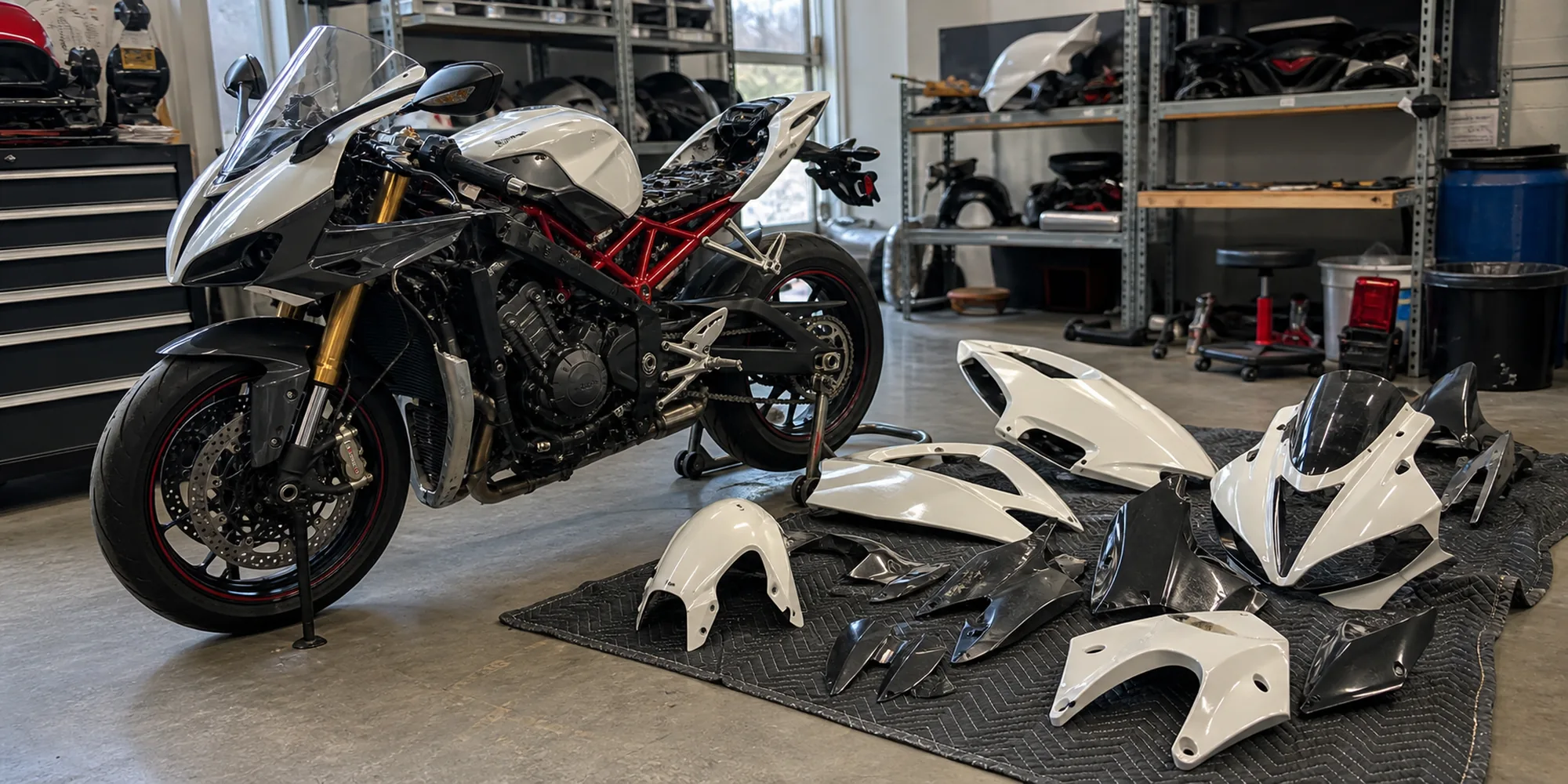
Here is the short answer: a motorcycle fairing is the outer shell that wraps around your bike frame, headlight, sides, belly pan, and tail section. It is not just decorative plastic. A good fairing manages wind, protects key areas from road debris, and defines the bike’s appearance. A poor kit can crack at the tabs, rattle at highway speed, or fail to line up with the tank and mounting points.
Key Takeaways
A motorcycle fairing is the outer body shell that wraps around your bike frame, headlight, and engine area. Full fairings offer the most wind protection. Half and quarter fairings are lighter and more common on naked bikes.
Common fairing materials include ABS plastic for street-replacement kits, fiberglass for track bodywork, and carbon-fiber composites for specialized lightweight parts. Fitment depends on the correct model and year range, mold accuracy, panel thickness, drilling, hardware, and the condition of the motorcycle’s brackets and stays—not on one material label alone.
Replacement bodywork can be sourced as OEM dealer panels or as an aftermarket set. The better route depends on the repair scope, originality goal, paint plan, and current total cost; use the aftermarket vs. OEM fairings guide for that decision.
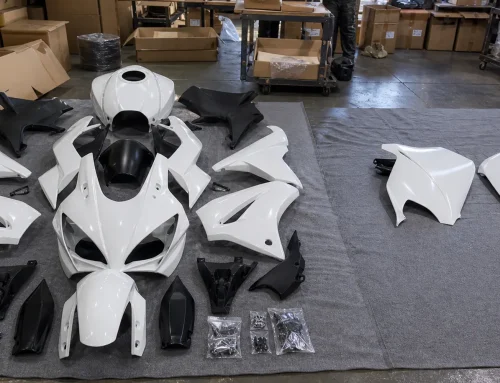
GoMotoTrip race fairings are a separate category: hand-laid fiberglass, undrilled, and intended for closed-course preparation. An unpainted kit arrives in white gel coat and still requires test fitting, drilling, surface preparation, and paint or decals before use.
What Are Motorcycle Fairings, Exactly?
A motorcycle fairing is a body shell fitted around selected areas of a motorcycle. Depending on its coverage and design, it can manage airflow around the bike, reduce wind exposure for the rider, and shield selected components from road debris.
On motorcycles equipped with fairings, the bodywork generally serves three functions:
Aerodynamics: Reduces air drag by streamlining the bike’s front profile. At highway speeds, a full fairing can reduce wind fatigue and help the motorcycle feel more stable than the same bike with exposed bodywork.
Protection: Shields the engine, radiator, and electrical components from road debris, rocks, and weather. It also protects the rider from wind fatigue on long rides.
Aesthetics: Fairings are among the largest visible surfaces on a fully faired motorcycle. Scratched, cracked, or mismatched panels can dominate the bike’s appearance, while a fresh, well-fitted set changes the overall finish.
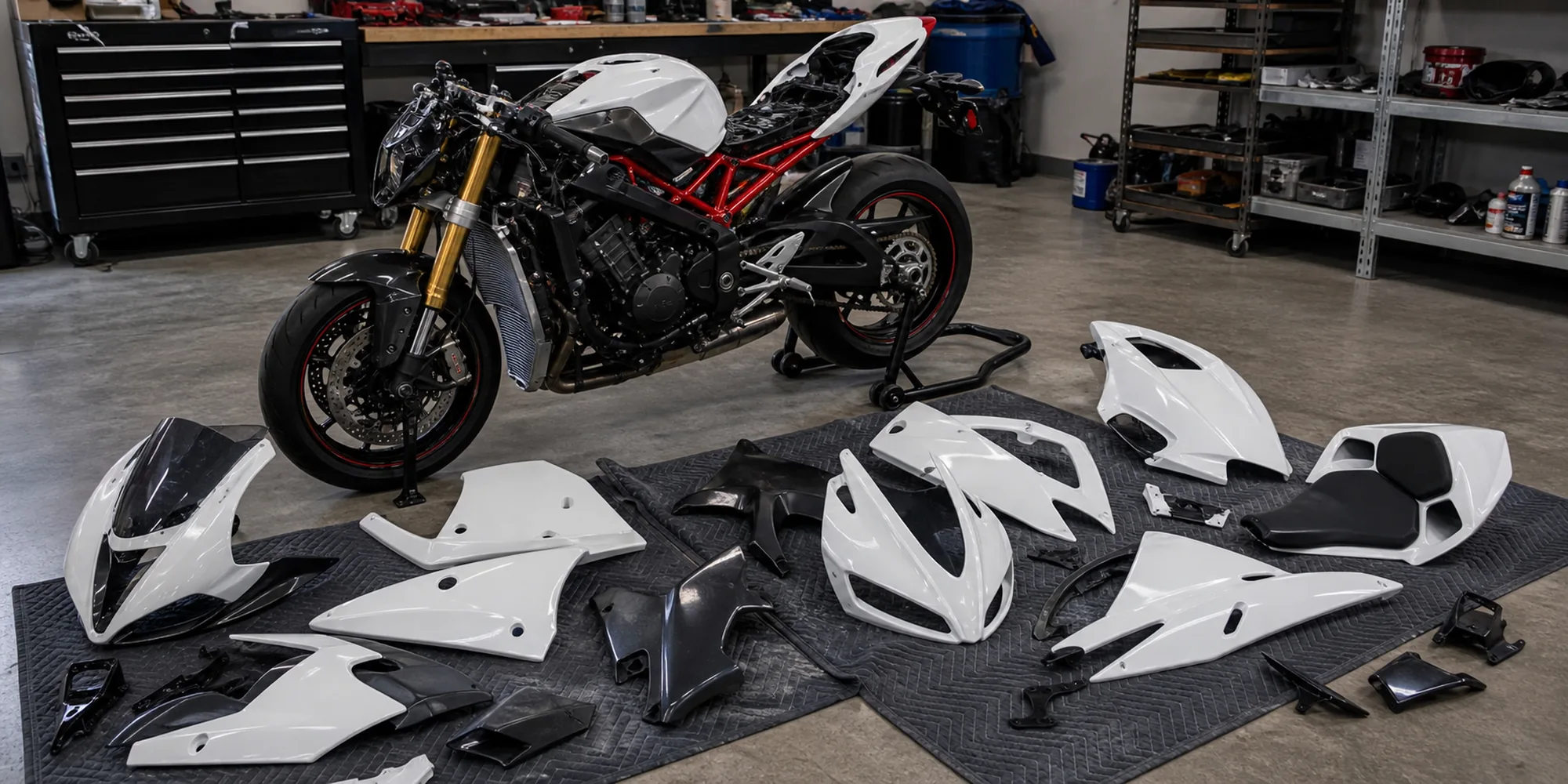
A fairing is the outer body shell around the frame, headlight, sides, belly pan, and tail section.
Types of Motorcycle Fairings
Full Fairing: Covers the entire front of the motorcycle, including the upper cowl, side panels, and lower belly pan. Found on supersport and sport-touring bikes like the CBR600RR, YZF-R1, and GSX-R1000. Provides maximum wind protection and aerodynamics.
Half Fairing: Covers only the upper front area, including the headlight, windscreen, and upper sides. The engine and lower frame are exposed. Common on naked bikes and streetfighters like the SV650 or MT-07. Offers moderate wind protection with a lighter, more aggressive look.
Quarter Fairing: A minimal shell around the headlight and instrument cluster. Found on cafe racers and retro bikes. Provides minimal wind protection, mostly cosmetic.
Belly Pan: Covers only the lower engine area. Common on naked bikes and some track setups. Keeps debris off the oil pan and exhaust headers.
Race Fairing: Full-coverage bodywork designed for closed-course use. GoMotoTrip race kits use hand-laid fiberglass and arrive undrilled, so they require trimming, test fitting, drilling, fastener installation, and paint preparation. An oil-containment belly pan is incorporated only where shown for the listed model; always check the product contents and the organizer’s technical rules.
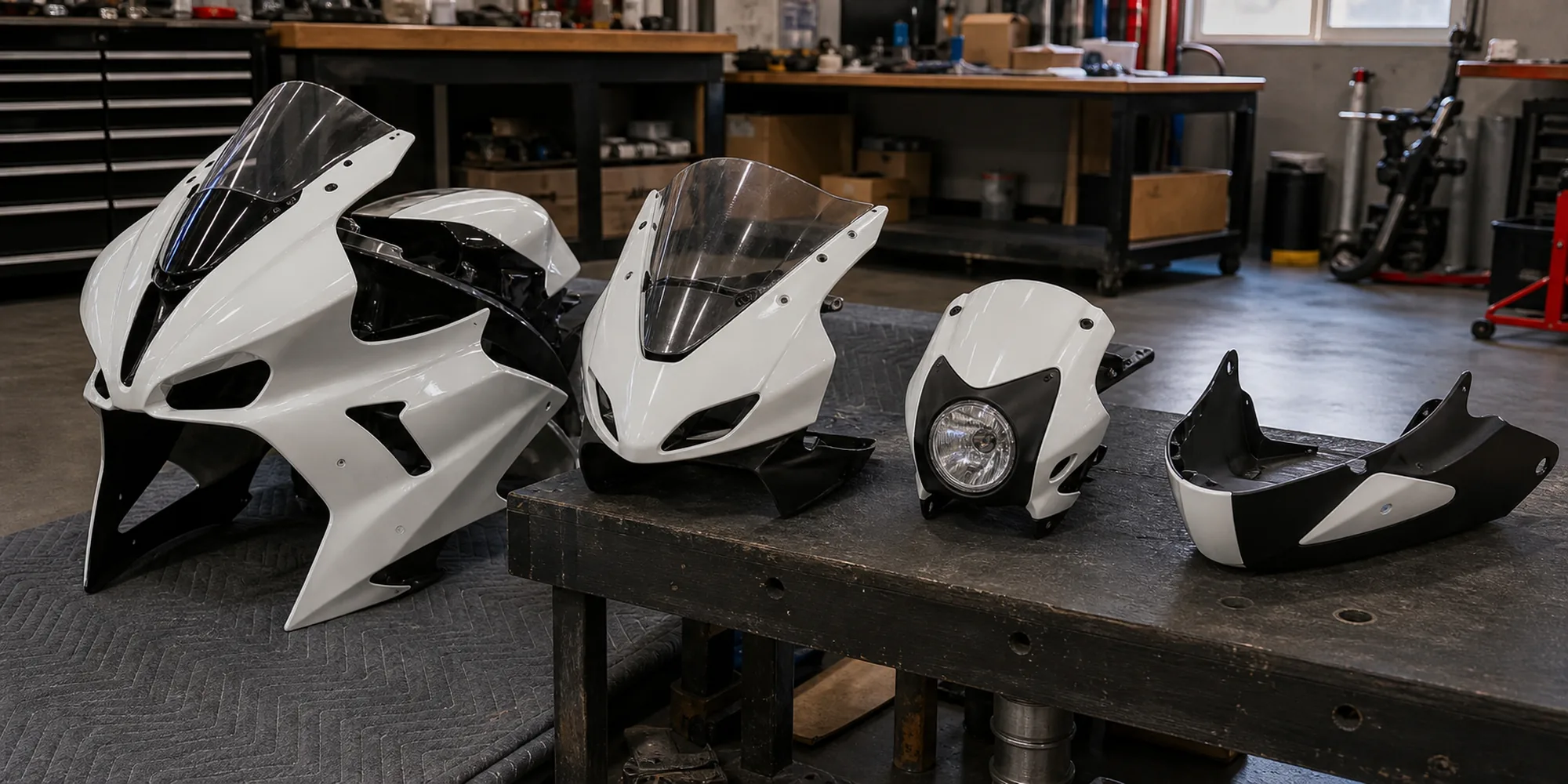
Full, half, quarter, belly-pan, and race-style bodywork differ mainly by coverage and intended use.
Fairing Materials: ABS vs. Fiberglass vs. Carbon Fiber
ABS Plastic: A widely used engineering thermoplastic for street fairings. Different ABS grades and molding processes can produce different results. GoMotoTrip standard street kits use virgin ABS; injection-molded kits have pre-drilled OEM-position mounting points, while compression-molded kits may require minor drilling, trimming, or alignment adjustment.
Fiberglass: A rigid composite material commonly used for race bodywork. GoMotoTrip race kits are hand-laid and reinforced at high-stress mounting areas. They arrive in white gel coat, undrilled, and require test fitting, trimming, drilling, surface preparation, and paint or decals before use.
Carbon Fiber: A composite option used for some specialized lightweight parts and race applications. Weight, stiffness, impact behavior, and cost depend on the fiber, resin, layup, and part design, so the material name alone does not guarantee performance.
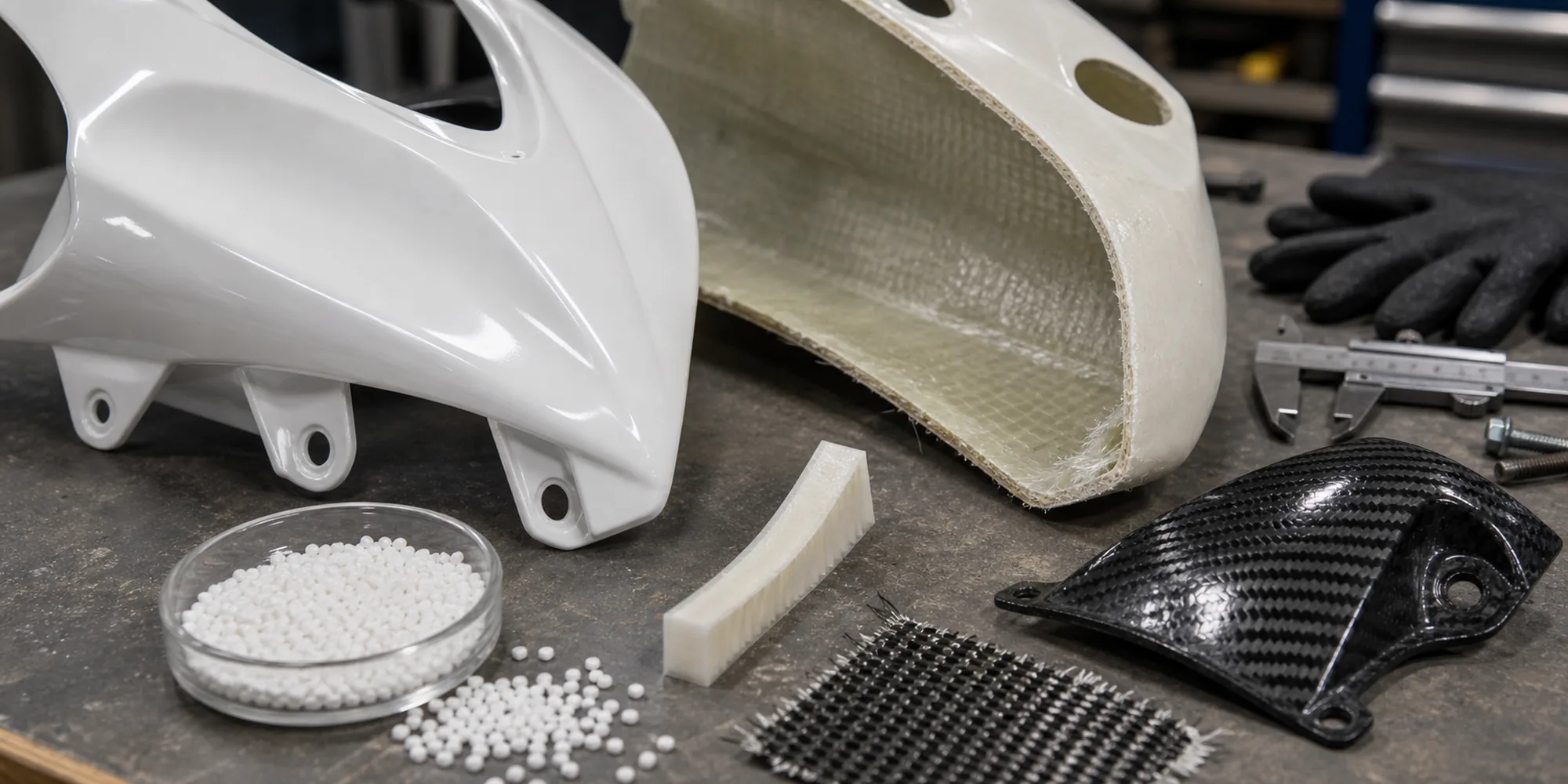
Street fairings usually use ABS plastic, while race bodywork often uses fiberglass and high-end race parts may use carbon fiber.
Why Material and Manufacturing Consistency Matter
Material choice is only one part of a fairing kit’s performance. Mold quality, panel thickness, drilling, mounting hardware, paint preparation, installation, and the bike’s bracket condition also matter.
Virgin ABS is made from new resin. Recycled-content ABS can be produced to different specifications, so the word “recycled” alone does not establish a kit’s thickness, strength, or fitment.
GoMotoTrip standard street kits use virgin ABS. Injection-molded kits use OEM-grade molds and pre-drilled OEM-position mounting points; compression-molded kits are also virgin ABS but may require minor drilling, trimming, or alignment adjustment.
Before ordering any kit, verify model/year compatibility, molding method, included parts, and installation requirements. Dry-fit every panel before final tightening, especially if the motorcycle has repaired brackets, bent stays, converted lighting, or other non-standard parts.
OEM and Aftermarket Are Different Replacement Routes
OEM dealer bodywork is generally ordered panel by panel in the motorcycle manufacturer’s specification. Aftermarket bodywork is offered outside that dealer parts system and may be sold as a complete replacement set.
Use the aftermarket vs. OEM motorcycle fairings guide to compare those routes. This article remains focused on what fairings are, the parts they cover, their functions, types, and basic materials.
Before You Buy: Verify the Complete Offer
After learning what motorcycle fairings are, verify the actual offer before ordering. Check the included and optional parts, material and molding route, mounting preparation, paint scope, real product evidence, full cost, production and shipping timing, and support process.
Use our motorcycle fairing kit buyer’s guide to work through those checks without turning basic model/year matching into the whole decision.
Frequently Asked Questions
What Are Motorcycle Fairings Made Of?
Motorcycle fairings commonly use ABS plastic for street bodywork and fiberglass for race bodywork; carbon-fiber composites appear in some specialized parts. GoMotoTrip standard street kits use virgin ABS, while its race kits use hand-laid fiberglass. Fitment also depends on the molding method, correct model/year coverage, drilling, hardware, and bracket condition.
What Are the Different Types of Motorcycle Fairings?
The main types are full fairing (supersport, covers entire front), half fairing (naked bikes, upper only), quarter fairing (retro/cafe, headlight only), belly pan (lower engine cover), and race fairing (fiberglass track bodywork, unpainted, undrilled).
Do I Need Fairings on My Motorcycle?
Whether a motorcycle can be ridden without particular body panels depends on the bike, local equipment rules, and whether required lights, mirrors, plate mounts, heat shielding, and other components remain secure. Do not ride with loose panels, exposed hazards, or damaged mounts. Check local requirements before removing street bodywork.
How Long Do Motorcycle Fairings Last?
There is no fixed service life for a fairing kit. Material and molding quality, installation, UV exposure, storage, cleaning chemicals, vibration, heat, and crash damage all affect how long panels, tabs, and paint remain usable. Replace or repair bodywork when cracks, loose tabs, sharp edges, or mounting damage make it unsafe or insecure.
Ready to Replace or Upgrade Your Fairings?
Browse the full motorcycle fairing collection at the GoMotoTrip store, or start with a brand hub such as Honda, Yamaha, Kawasaki, Suzuki, Ducati, BMW, Aprilia, or Triumph. For track builds, see our race fairings. Free custom paint is included on standard painted street kits. Standard shipping is free to most destinations; remote locations may require a partial shipping charge.